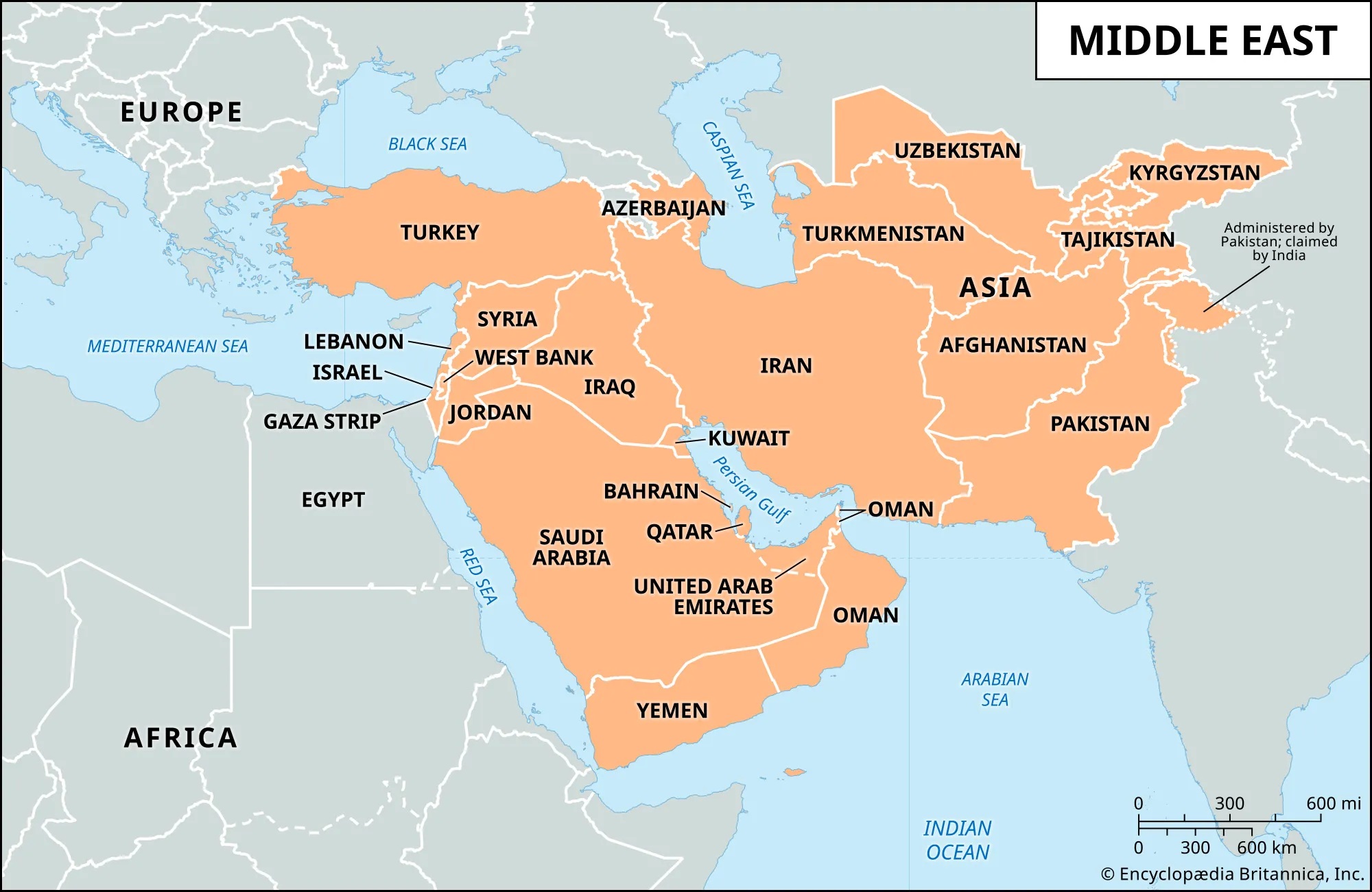
Three structural factors—energy, trade routes, and power rivalries—concentrate most of the region’s tensions today. Here are the five fault lines shaping the balance of power in the Middle East in 2026.
1- Israel – Iran: the central strategic confrontation
The rivalry between Israel and Iran constitutes the main axis of regional tensions. Iran has developed a strategy of indirect warfare relying on a network of armed actors across the region. Estimated capabilities:
- more than 3,000 ballistic missiles;
- maximum range of about 2,000 km;
- a network of allied militias totaling around 240,000 fighters;
Main regional proxies:
- Hezbollah (Lebanon);
- Hamas (Gaza);
- Houthis (Yemen).
Iran’s strategic objective is to encircle Israel through a regional arc of influence.
2- Gaza: the epicenter of the Israeli–Palestinian conflict
The war triggered by the October 7, 2023 attacks brought the Palestinian issue back to the center of international attention. Estimated toll:
- about 1,200 deaths in Israel;
- 30,000 to 35,000 deaths in Gaza;
- nearly 1.7 million displaced people.
In a territory of 365 km² with more than 2.2 million inhabitants, the humanitarian crisis has become a global political issue.
3- Strategic maritime routes
The Middle East controls several key chokepoints of global trade. Major passages:
- Strait of Hormuz: about 20% of global oil flows;
- Bab el-Mandeb: about 9% of global oil trade;
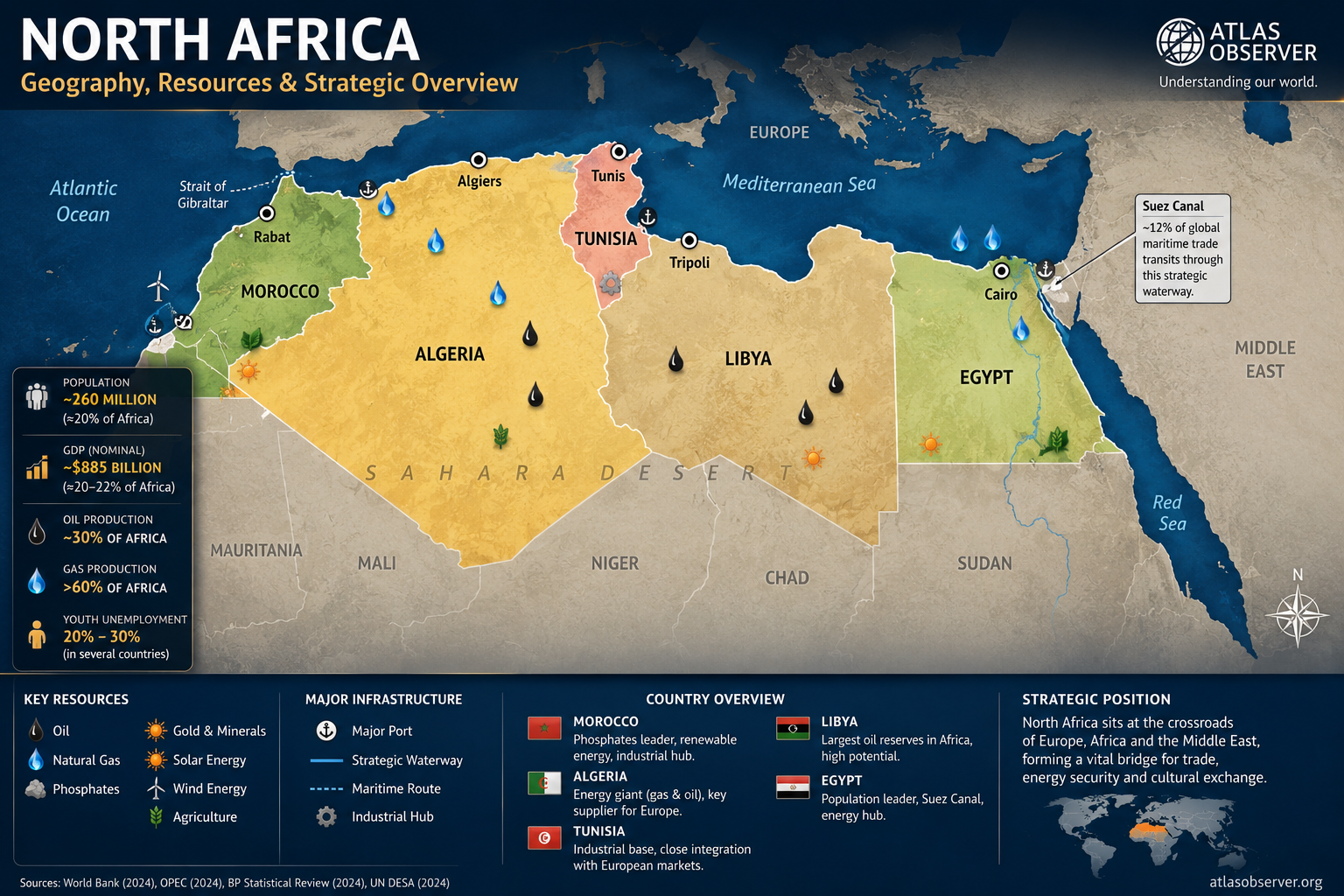
- Suez Canal: nearly 12% of global trade.
Since late 2023, attacks by the Houthis in the Red Sea have disrupted international shipping. Consequences:
- traffic through the Suez Canal down by about 40%;
- rerouting of many shipping lines via the Cape of Good Hope;
- significant increase in global logistics costs.
4- Energy competition
The Middle East holds:
- about 48% of global oil reserves;
- about 38% of global natural gas reserves.
Three powers dominate regional production:
- Saudi Arabia: about 10 million barrels per day;
- United Arab Emirates: about 3 million barrels per day;
- Qatar: about 2 million barrels per day.
Sovereign wealth funds in the Gulf now manage more than $3 trillion in assets, strengthening their global financial influence.
5- Regional diplomatic realignment
The Abraham Accords (2020) significantly reshaped the regional landscape. Countries that normalized relations with Israel are:United Arab Emirates, Bahrain, Morocco and Sudan. The major diplomatic question remains the potential normalization between Israel and Saudi Arabia, which could transform the strategic balance of the region.
The Middle East is currently shaped by three major dynamics:
- a structural military rivalry between Iran and Israel;
- the region’s central role in global energy markets;
- a gradual diplomatic realignment in the Arab world.
With nearly half of the world’s hydrocarbon reserves and several vital maritime routes for global trade, the Middle East remains one of the primary pivots of the global geopolitical balance.
Atlas Observer Research Desk
Atlas Observer’s editorial and analytical desk.